Kitchen splashbacks and floors
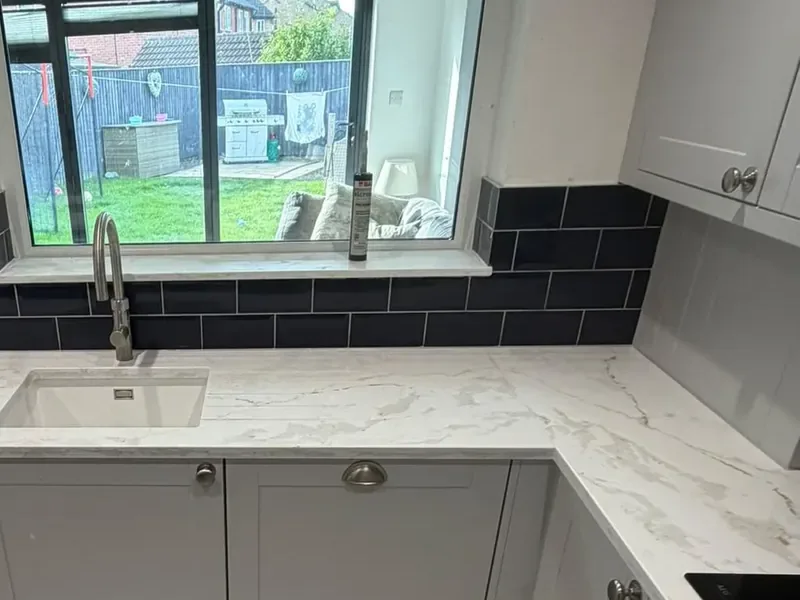
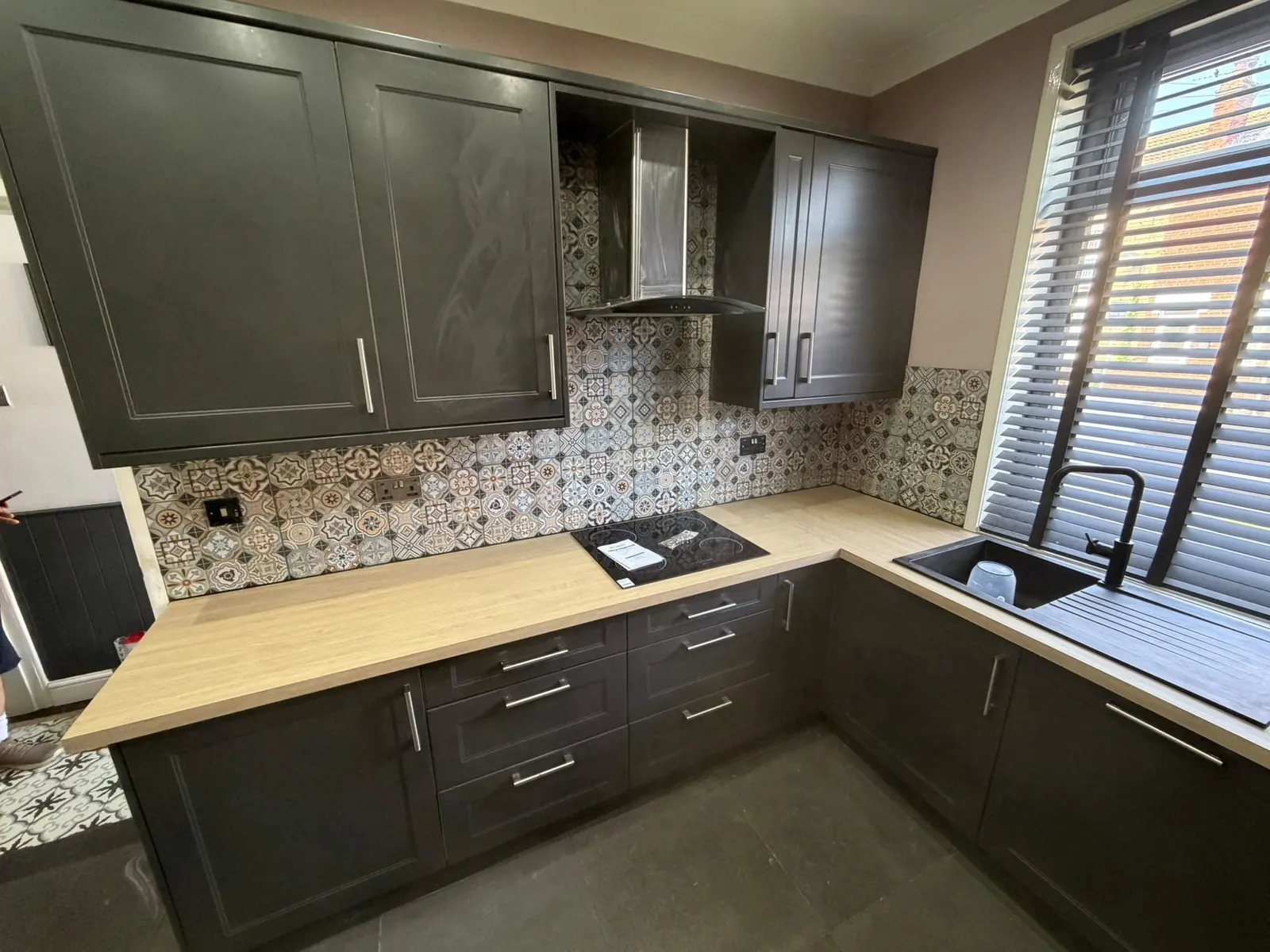
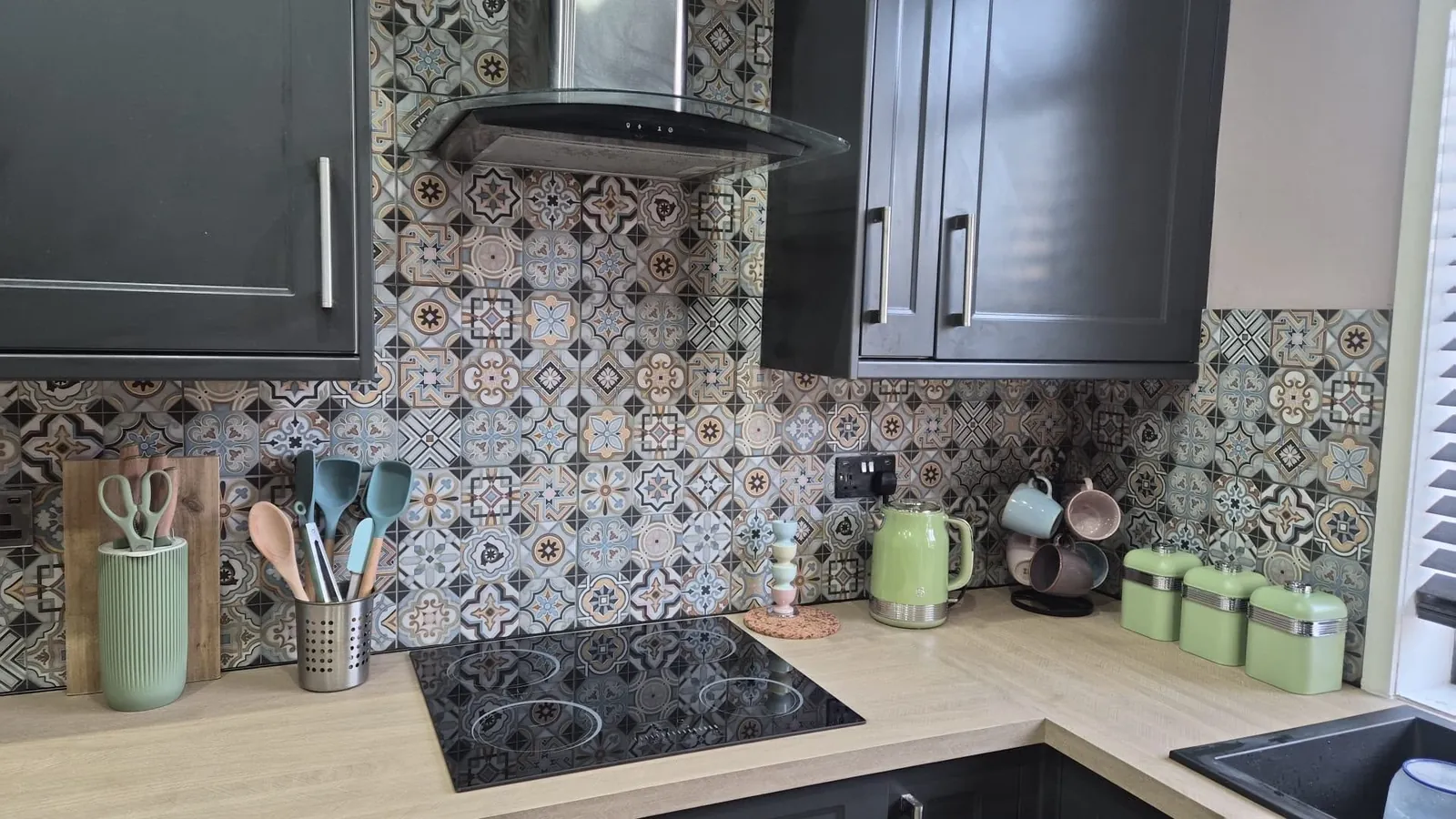
Splashbacks are tiled after worktops are fitted, with cuts planned around sockets and windows. Kitchen floors need a flat, stiff base and are often laid before units in new builds or after in refits.
Tiling
Straight lines, even grout and cuts in the right places. Tiling for kitchens, bathrooms and floors, prepared properly underneath so it stays looking good for years.
18 years self-employed in the trade · Available 7 days a week
The service
Tiling covers kitchen splashbacks, bathroom and shower walls, kitchen, bathroom and hallway floors, and larger areas in open-plan extensions. Done well, it is the finish people notice first in a room.
It suits homeowners fitting a new kitchen or bathroom, renovating a whole house, or finishing a new extension, as well as those replacing tired or cracked tiles.
Good tiling is mostly preparation and setting out. The surface must be flat, sound and suitable for the tile; wet areas need waterproofing; floors need to be stiff enough not to crack tiles; and the layout is planned so cuts sit where they will not be noticed.
Tiling is co-ordinated by Andrew alongside the rest of your project, so it happens at the right point, after plumbing, electrics and plastering and before final fixtures go on.
Tiling is also one of the last trades before a room is finished, so any delay holds up everything that follows: the sink cannot go in, the shower screen cannot be fitted and the flooring cannot be laid. Scheduling it as part of the whole project, with the surfaces ready and the tiles on site, is what keeps the final stage of a kitchen or bathroom moving. Andrew plans that sequence as part of your quote, so the tiler arrives to walls and floors that are ready, not half finished.
What it costs to get wrong
Tiles laid on a poor base crack, sound hollow or lift. Showers tiled without waterproofing can let water into walls and floors for months before the damage shows.
Poor setting out leaves thin slivers at edges, uneven lines and awkward cuts around windows and fittings, and it cannot be fixed without starting again.
Our process
The area is measured and the walls or floor checked for flatness and suitability.
A clear quote covering preparation, tiling and finishing.
Surfaces levelled, boarded or waterproofed as needed.
Layout planned from the centre lines, then tiles fixed and cut.
Grouted, sealed where needed, cleaned and handed over.
What you get
Layout planned so cuts sit where they are least visible and lines stay straight.
Proper preparation underneath so tiles do not crack, lift or sound hollow.
Wet areas waterproofed before tiling to protect walls and floors.
Tiling scheduled after plumbing, electrics and plastering, as part of the whole project.
Andrew organises tiling with the rest of your kitchen, bathroom or renovation.
Working 7:30am to 7:30pm, seven days a week.
In detail
The main types of tiling work and what each involves.
Splashbacks are tiled after worktops are fitted, with cuts planned around sockets and windows. Kitchen floors need a flat, stiff base and are often laid before units in new builds or after in refits.
Shower areas are waterproofed with a tanking system before tiling. Wall and floor layouts are planned together so grout lines line up where possible.
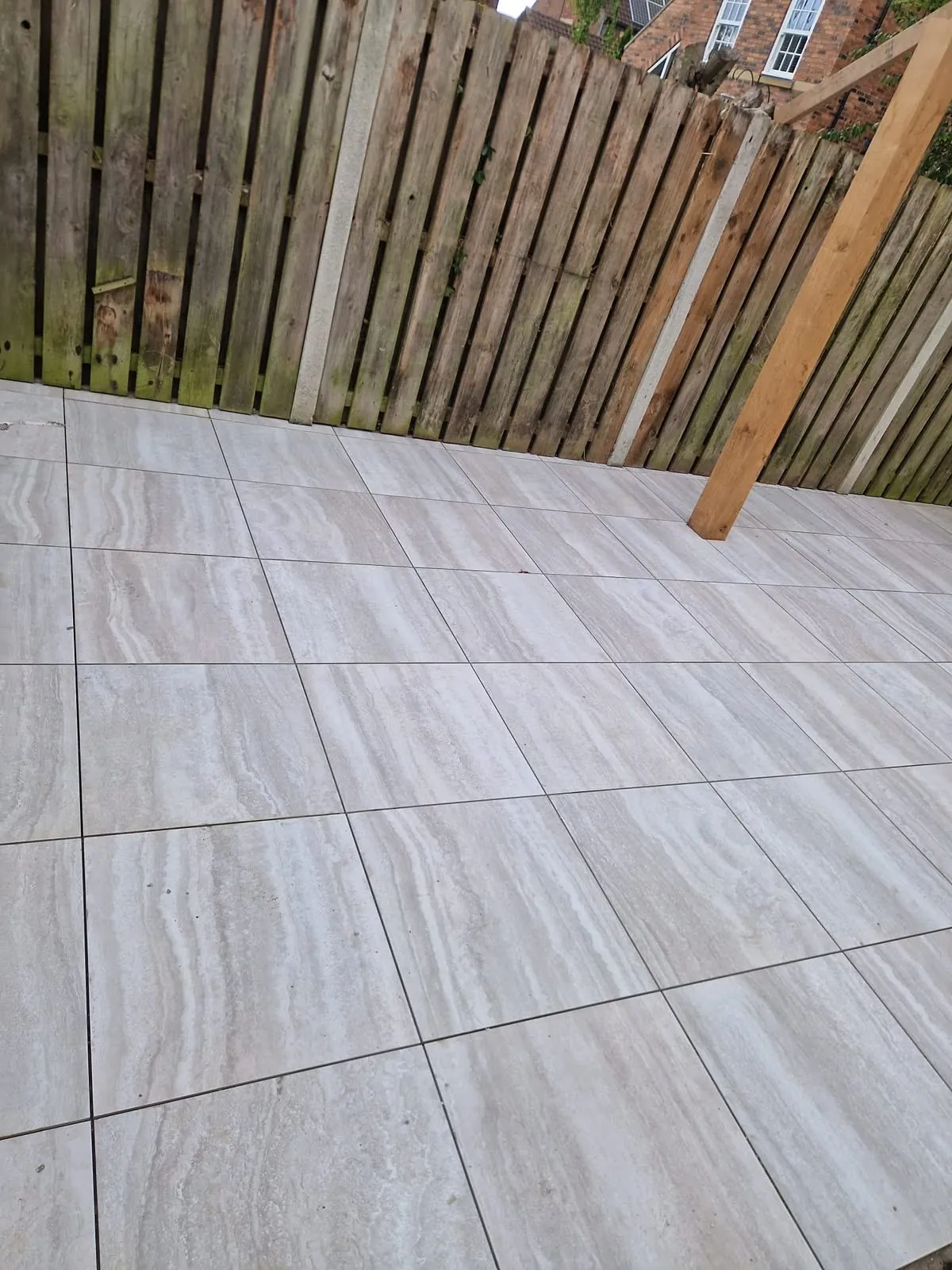
Large porcelain tiles look striking in extensions and open-plan spaces but need very flat surfaces and careful handling to avoid lipping between tiles.
Tiled floors work well with underfloor heating. The system, insulation and screed or boards are planned together, and flexible adhesives and grouts are used.
Different tiles and locations need different adhesives and grouts. Natural stone often needs sealing. The right products make the finish easier to clean and longer-lasting.
Hallway floors take heavy daily wear, so they need a hard-wearing tile and a solid, flat base. In older Yorkshire houses, original floors sometimes need levelling or overboarding before tiles can go down.
In open-plan extensions, a continuous tiled floor running from kitchen to living space makes the room feel larger. Movement joints are planned in to allow for the size of the area and any change in base between old and new floors.
Porcelain is dense, hard-wearing and suits floors and wet areas. Ceramic is lighter and easier to cut, making it popular for walls and splashbacks. Natural stone looks distinctive but usually needs sealing and more care.
Slip resistance matters on bathroom and kitchen floors, and larger tiles mean fewer grout lines, which are easier to keep clean. Andrew will talk through the practical side of the tiles you are considering before they are ordered.
Old tiles are removed carefully to avoid damaging the plaster or floor underneath more than necessary. Any damage is repaired so the new tiles have a flat, sound base.
Common questions
Anything not covered here, ask Andrew directly on 07939 194244. 7:30am to 7:30pm, 7 days a week.
Every tiling job is priced individually after Andrew has seen the property, because the area, the tile type and the preparation needed change the figure more than anything else. Pricing is never less than a day rate, and a deposit is taken before work starts; the amount depends on the type of job. You get a clear, itemised quote before you commit to anything.
It depends on the area, the tile size and the preparation needed, plus drying times for adhesives and waterproofing. Andrew will give you realistic timings once he has seen the job.
Sometimes, if the existing tiles are sound and the extra height and weight are acceptable. Often removing them gives a better, longer-lasting result. Andrew will advise once he has seen them.
Yes. Shower areas and wet zones are waterproofed before tiling to protect the walls and floor behind.
Yes. Tiled floors are well suited to underfloor heating, using flexible adhesives and grouts.
Tiling is most often carried out as part of kitchens, bathrooms, extensions and refurbishments. Pricing is never less than a day rate, so talk to Andrew about your job.
Andrew will explain what cover applies to your tiling job when he quotes, so you know where you stand before any work begins. Because he runs the project personally, the person you call about anything after completion is the same person who built it.
Give adhesive and grout time to cure fully before heavy use, especially in showers. After that, regular cleaning with a pH-neutral cleaner keeps grout looking fresh; harsh or acidic products can damage grout and natural stone. Sealed stone may need resealing over time, and Andrew will tell you if that applies to the tiles you choose.
Yes. Design Built Right works 7:30am to 7:30pm, seven days a week, including weekends. That helps when you need work done around your own job, or when a stage has to be completed before a specialist or inspector arrives. We are a planned renovation business rather than an emergency call-out service.
Yes. Andrew is based in Thorpe Willoughby, near Selby, and takes on tiling across York, Leeds, Tadcaster, Sherburn in Elmet, Goole, Pontefract, Wetherby and Doncaster, as well as the wider North, West, East and South Yorkshire area.
Based in Thorpe Willoughby, near Selby, covering North, West, East and South Yorkshire. See all service areas, go back to the homepage or contact Andrew.
Send Andrew the details of your project for a clear quote, with no obligation.
18 years in the trade · City & Guilds joinery · Building control handled · Registered gas engineer and electrician · Open 7 days